




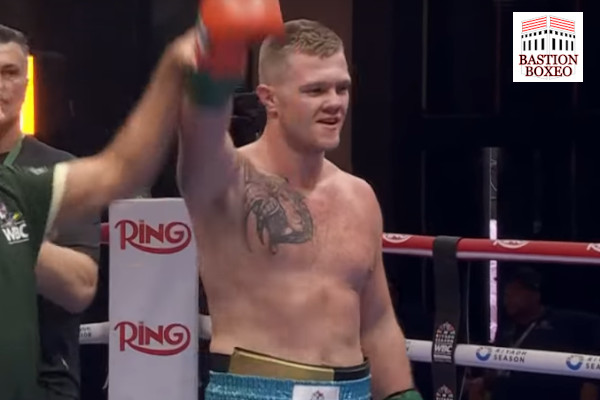


Pacquiao retornó con cuestionable empate contra un Barrios que no debería ser campeón
Daniel Pi
@BastionBoxeo
Como ningún organismo o comisión se interesa por otra cosa que no sea por recabar el mayor dinero posible, y pasados por alto los peligros que entrañaba el combate para un boxeador que empezó a combatir en 1995, el filipino Manny Pacquiao 62(39KO)-8(3)-3 retornó al ring anoche en el MGM Grand de Las Vegas Estados Unidos. Lo hizo ante el estadounidense Mario Barrios 29(18KO)-2(1)-2, que tenía todas las ventajas físicas posible: 16 años más joven, un castigo padecido infinitamente menor, 17 cm más de altura, etc. Con todo, demostrando como de mediocre verdaderamente es, y que no merece ser campeón mundial del peso wélter, Barrios fue incapaz de establecer una superioridad ante un Pacquiao que no es ni siquiera una sombra de lo que fue y que llegaba de casi cuatro años de inactividad.
Así, la pelea terminó en empate con puntuaciones de 114-114, 114-114 y un 115-113 a favor de Barrios, aunque muchos vieron el triunfo de Pacquiao, resultado que es perfectamente justificable (Bastión Boxeo puntuó 115-113 para Pacquiao).
El enfrentamiento en varias ocasiones fue frustrante de ver. Por un lado, Pacquiao, cuyo boxeo siempre ha dependido de su explosividad ofensiva y su persistencia en sus veloces y agresivas combinaciones, en estos momentos de su carrera no tenía la rapidez o la contundencia para atacar como debería. Y además necesitaba gestionar su mermada resistencia al cansancio para no terminar derrotándose a sí mismo. Así que sus ofensivas se espaciaron bastante y cuando se produjeron estaban muy faltas de chispa.
Por otro lado, Barrios siempre ha sido un boxeador que suele tener una cadencia de golpeo muy baja, que cede la iniciativa y que es expectante hasta extremos absurdos. Además, carece de la variedad de recursos, la pegada o la astucia para generar un control táctico conservador o buscar una ruptura del combate.
De ese modo, Pacquiao y Barrios pasaron bastante tiempo mirándose, estudiándose y tantéandose con los jabs sin que pasase demasiado, por lo que la pelea se desarrolló igualada y contendida en líneas generales. En otras palabras, los asaltos se decidían en función de quién ponía un poco más de intensidad en ofensivas puntuales, si un Pacquiao que ya no puede, o un Barrios que no quiere o no sabe.
A base de algunos jabs y muy escasos uno-dos, Barrios quizás pudo tener algo más de acierto que Pacquiao durante la primera mitad, pero en la segunda fue el filipino el que utilizó sus cortas combinaciones de rectos y sus izquierdas en trayectorias poco convencionales con mejores resultados. En cualquier caso, y al margen de la puntuación de los rounds, la sensación general es que un boxeador acabado había hecho más con sus intentos ofensivos, su uso de las diagonales y sus bloqueos que un campeón mundial reinante en plenitud física.
Tras el combate se han formulado muchas teorías respecto a qué pasará a continuación, considerando muchos que el empate se presta a una revancha. Otros formulan opciones alternativas para Pacquiao de lo más variadas. No obstante, y si bien es improbable que lo más racional sea lo que suceda, lo mejor para el pugilismo sería que Pacquiao aceptase de una vez que su carrera tiene que terminar y que Barrios fuese retado por alguien que lo saque de una posición que no debería ostentar.

Pacquiao returns with questionable draw against Barrios, who shouldn’t be champion
Daniel Pi
@BastionBoxing
Since no organization or commission is interested in anything other than collecting as much money as possible—and they overlooked the dangers involved in a fight for a boxer who began competing in 1995—Filipino Manny Pacquiao 62(39KO)-8(3)-3 returned to the ring last night at the MGM Grand in Las Vegas, United States. He did so against American Mario Barrios 29(18KO)-2(1)-2, who had every physical advantage imaginable: 16 years younger, far less wear and tear, 17 cm (6.5”) taller, etc. Even so, showing just how mediocre he truly is and that he doesn’t deserve to be welterweight world champion, Barrios was unable to assert any superiority over a boxer who is not even a shadow of what he once was and who came in after nearly four years of inactivity.
Thus, the fight ended in a draw with scorecards of 114-114, 114-114, and one 115-113 in favor of Barrios, although many saw Pacquiao as the winner—a result that is perfectly justifiable (Bastion Boxing scored it 115-113 for Pacquiao).
At times, the bout was frustrating to watch. On one hand, Pacquiao—whose boxing has always depended on his offensive explosiveness and persistence in fast, aggressive combinations—no longer had the speed or power to attack as he should. He also had to manage his diminished stamina to avoid defeating himself. So his attacks were spaced out, and when they came, they lacked spark.
On the other hand, Barrios has always been a boxer with a very low punch output, who gives up the initiative and waits to an absurd degree. He also lacks the range of tools, punching power, or astuteness to impose a conservative tactical control or to break the fight open.
As a result, Pacquiao and Barrios spent a lot of time staring at each other, studying and probing with jabs without much happening, so the fight unfolded evenly and closely overall. In other words, rounds were decided based on who showed a bit more intensity in isolated offensive bursts—whether it was Pacquiao, who can no longer do it, or Barrios, who doesn’t want to or doesn’t know how.
With a few jabs and very scarce one-twos, Barrios may have had slightly more success than Pacquiao in the first half, but in the second, it was the Filipino who used short combinations of straight shots and his unconventional lefts with better results. In any case, regardless of round scoring, the general feeling is that a finished boxer did more with his offensive attempts, use of the angles, and blocks than a reigning world champion in full physical condition.
After the fight, many theories have emerged about what will happen next, with many believing the draw sets the stage for a rematch. Others propose a wide range of alternative options for Pacquiao. However, even if it’s unlikely that the most rational path will be followed in boxing, the best thing for the sport would be for Pacquiao to finally accept that his career must end—and for Barrios to be challenged by someone who removes him from a position he should not hold.